

 English
 Français
 Deutsch
 Nederlands
In medical packaging, small details often shape daily reliability. A pouch is not only a container; it is part of a controlled workflow that supports cleanliness, organization, and traceability from preparation to storage. For that reason, packaging decisions are rarely made on appearance alone. Material structure, sealing behavior, compatibility with sterilization methods, and handling convenience all matter in routine use.
Content
- 1 Material Design as the Foundation of Practical Use
- 2 Seal Integrity and the Value of Consistency
- 3 Compatibility with Sterilization Methods
- 4 Workflow Efficiency in Daily Clinical Operations
- 5 Handling, Storage, and Visual Control
- 6 The Role of Standardization in Packaging Practice
- 7 Practical Factors That Influence Purchasing Decisions
Material Design as the Foundation of Practical Use
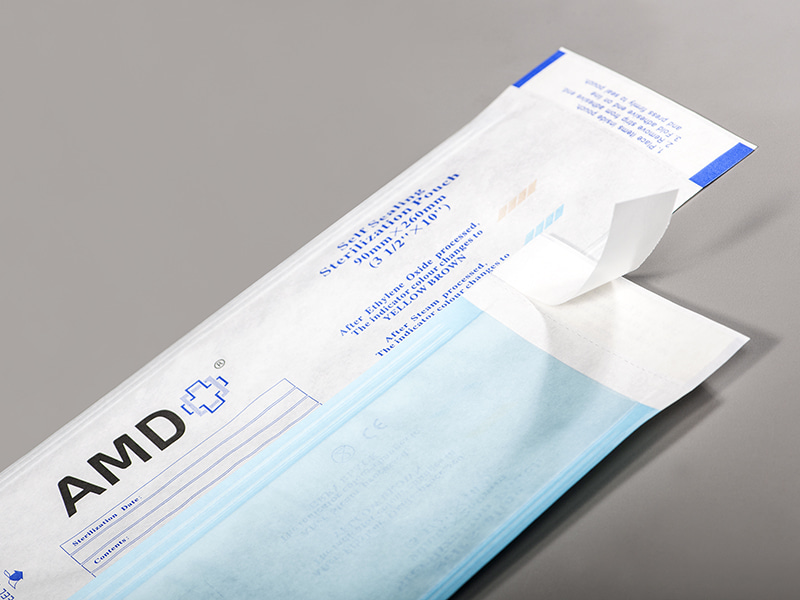
In sterilization packaging, the outer layer and inner layer serve different functions. One side must offer a readable surface for labeling and visual inspection, while the other must support contact with the packaged item and allow reliable processing in sterilization workflows. A balanced structure helps staff manage both protection and usability.
Material choice also affects how the pouch behaves during handling. If the surface is too fragile, it may be harder to fold, load, or seal without creating stress points. If it is too stiff, it may be less convenient during packing or storage. A well-considered design usually aims for a workable balance, allowing the user to move through preparation steps with less friction.
Transparency is another practical concern. Clear viewing areas help staff confirm the general state of the contents without opening the package. That can be useful in storage, inventory checks, and post-process organization. At the same time, the surface should remain suitable for marking essential information, because labeling is part of maintaining a disciplined sterilization routine.
The material must also support a clean edge during sealing. If the structure responds unevenly to heat, the package may show inconsistent bonding or irregular margins. Stable material behavior is therefore not a decorative detail; it is part of how the pouch performs in a real clinical setting.
Seal Integrity and the Value of Consistency
Seal quality is one of the important points in any heat-sealed packaging format. A seal that is too weak may create concerns during transport or storage, while a seal that is uneven may complicate visual inspection. In day-to-day use, staff need a package that behaves in a predictable way when it passes through sealing equipment.
Consistent sealing performance depends on how the pouch reacts to heat across the sealing area. Uniform response helps create a neat closure and reduces the chance of irregular edges. This does not mean the process is automatic in every environment, because equipment settings, operating habits, and loading technique still matter. But a package designed for thermal sealing can make the process easier to standardize.
Another point is how the pouch maintains its closure after processing. A stable seal supports orderly handling during cooling, moving, and storage. That matters because sterilized items may pass through several stages before they are used. Packaging that remains orderly through those stages can help reduce unnecessary rework and help staff maintain confidence in the packaging line.
Visual inspection is closely linked with seal behavior. When a seal line is clear and even, staff can review the package more efficiently. That supports routine checks and helps create a more structured workflow. In this sense, seal integrity is not only about closure. It is also about the visibility of quality in the final package.
Compatibility with Sterilization Methods
Sterilization packaging must align with the process used in the facility. Different methods place different demands on the package, and compatibility is not something to assume casually. The pouch material, closure style, and overall construction should all work in a way that suits the intended processing route.
A practical pouch is designed with this compatibility in mind. It should allow the sterilizing agent or process to interact with the contents as intended while still maintaining package structure. That balance is central to its function. A package that blocks the process is not useful, and a package that cannot maintain its form afterward is also not useful. The aim is steady performance through the full cycle.
Facilities often use more than one workflow depending on item type, department routine, or equipment setup. For that reason, packaging that adapts well to different sterilization environments can simplify inventory and reduce confusion among staff. A clear compatibility profile helps teams choose packaging more confidently and use it in a more organized way.
This is also where training matters. Even a well-designed pouch needs correct handling, correct filling, correct sealing, and correct labeling. Compatibility is not only a product property; it is also the result of how the product is used. A thoughtful design supports correct use by making the process easier to follow.
| Aspect | Practical Consideration | Application Value in Clinical Settings |
|---|---|---|
| Material Structure | Balanced flexibility and strength | Supports smooth handling and consistent packaging |
| Surface Transparency | Clear visibility with writable area | Helps inspection, labeling, and storage management |
| Seal Consistency | Even heat response across sealing area | Reduces irregular sealing and improves workflow |
| Seal Stability | Maintains closure after processing | Supports safe transfer and organized storage |
Workflow Efficiency in Daily Clinical Operations
Sterilization packaging is not only judged by technical structure. It is also judged by how it fits into the work rhythm of the department. In busy environments, packaging steps must be straightforward enough to support routine movement without slowing down the process.
A pouch that opens cleanly, loads smoothly, and seals predictably can reduce unnecessary interruption. Staff do not need to spend extra time adjusting the package or checking whether the closure is even. That kind of efficiency is valuable because it helps preserve attention for more important clinical tasks. Packaging should support the workflow rather than add uncertainty to it.
Order also matters. A standardized pouch format can make it easier to organize items by department, instrument type, or procedure stage. Clear packing habits support simpler storage and retrieval. When packages are consistent in shape and closure, they are easier to stack, sort, and inspect.
The same idea applies to labeling. A pouch that provides a clean surface for identification helps the team keep records organized. In clinical settings, packaging is not separate from documentation. It contributes to the system of identification that helps items move through sterilization, storage, and use in a controlled manner.
Handling, Storage, and Visual Control
Once an item has been processed, the package still has work to do. It must support storage conditions, remain recognizable, and help preserve the order of the instrument supply chain. Packaging that is clear, neat, and easy to read can make these later stages smoother.
Storage often requires regular visual checks. Staff may need to confirm the package state without opening it. For this reason, a stable, transparent, and orderly pouch format is useful. It supports quick review and helps reduce unnecessary handling. Less handling can also mean less disruption to the packaging surface, which is beneficial during long storage periods.
Visual control also includes the ability to detect changes in package appearance. When the pouch is designed with a clean presentation, deviations are easier to notice. That can be helpful during routine quality review. A consistent design creates a reference point, and that reference point can support better internal oversight.
In addition, handling safety is part of the user experience. Packaging should be comfortable to move, hold, and place without creating confusion. A format that behaves consistently supports more careful work and reduces avoidable strain on staff who perform these tasks repeatedly.
The Role of Standardization in Packaging Practice
A strong packaging program is usually built on standardization. When staff use the same type of pouch for similar items or processes, the department can develop clearer habits. Standardization does not remove judgment, but it does create structure. That structure helps reduce variability in routine tasks.
A standardized thermal sealing format can support easier training for new staff. Once the steps are clear, training can focus on correct loading, correct sealing, and correct labeling rather than on repeated product-specific adjustments. This can make the work easier to teach and easier to maintain across shifts.
Standardization also helps when multiple people share responsibility for preparation. If the pouch behaves consistently, the team is less likely to face confusion over closure quality or package appearance. That can contribute to smoother internal coordination and better continuity from one workstation to another.
From a procurement point of view, a standardized packaging choice may also make supply management more orderly. Departments often value products that fit existing procedures without requiring constant process change. A pouch that integrates into current routines is often easier to adopt and maintain.
Practical Factors That Influence Purchasing Decisions
When facilities review sterilization packaging options, they usually consider a set of practical questions. Does the pouch support the intended workflow? Does the material feel manageable during daily use? Does the seal behave consistently? Can the package be read, labeled, and stored with ease? These questions matter more than appearance alone.
The purchasing decision is also shaped by staff comfort. Products that are simple to understand and easy to use may be adopted more smoothly. A package that supports clear use habits can reduce hesitation during packing and help maintain routine discipline.
Another factor is adaptability across departments. A packaging format that can serve general clinical needs may be easier to integrate into an existing supply system. This can reduce the need for multiple formats that create extra sorting and training demands. Facilities often value solutions that fit naturally into current procedures.
In many cases, the right choice is not the one that draws attention, but the one that works quietly and consistently in the background. That is especially true in sterilization packaging, where reliability, clarity, and repeatable use are essential.
Sterilization packaging succeeds when it supports the full routine of clinical preparation, processing, storage, and use. Material design, seal quality, and method compatibility all shape how the pouch performs in practice. When these elements are considered together, the result is a package that fits into daily work with less disruption and clearer structure.
The name Hopeway AMD represents a packaging approach centered on those practical needs. For teams that value orderly workflow, readable presentation, and stable sealing behavior, this type of product can serve as a thoughtful part of the sterilization process. In that sense, the pouch is more than a container.



 ‘s-Gravenweg 542, 3065SG RotterdamThe Netherlands
 +31 (0)10 254 28 08