

 English
 Français
 Deutsch
 Nederlands
Content
- 1 Why does a sterilization flat roll quietly stay at the center of medical packaging work?
- 2 What is the structural idea behind a sterilization flat roll?
- 3 How does sealing turn a simple sheet into a controlled environment?
- 4 Why does material behavior matter more than it seems in daily operation?
- 5 How does flexibility change packaging decisions in real workflow?
- 6 How does visibility support fast and low-interruption workflow?
- 7 What happens when stability is inconsistent across materials?
- 8 How does packaging structure support long-term storage conditions?
- 9 How does workflow rhythm depend on packaging consistency?
- 10 Why does sterilization flat roll usage feel more like a system than a material?
- 11 How does design simplicity support operational clarity?
- 12 What makes sterilization flat rolls remain relevant in changing packaging environments?
Why does a sterilization flat roll quietly stay at the center of medical packaging work?
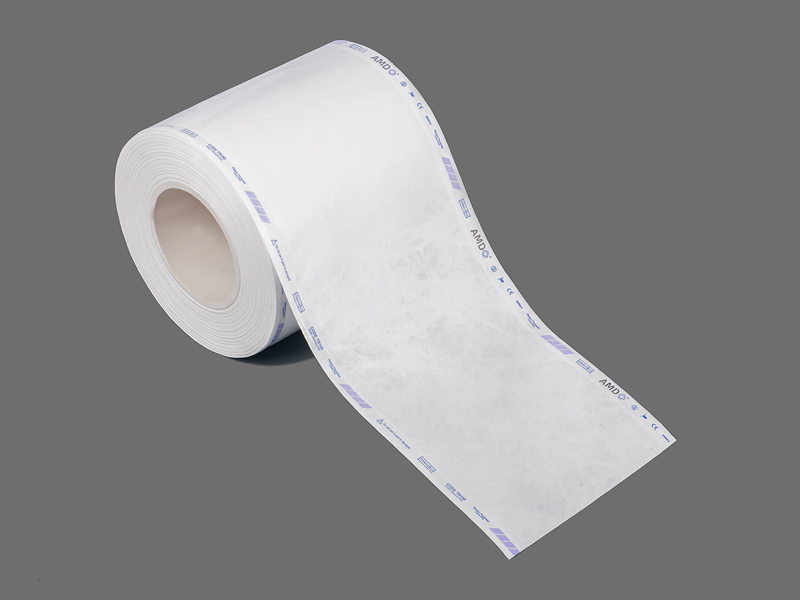
In medical packaging environments, sterilization flat rolls are not something that draws attention at first glance. They are simple, even plain in appearance. Yet they appear again and again in daily routines.
The reason is not complexity, but repetition.

Medical instruments move through a chain of steps. Cleaning, packaging, sterilization, storage, and final use. Between each step, packaging acts like a holding layer that keeps everything stable.
A sterilization flat roll becomes part of that layer. It does not act like a rigid container. It does not behave like a fixed box. Instead, it changes form based on need.
This adaptability is what makes it practical. One material can serve many different packaging sizes. That reduces switching time and simplifies preparation work.
Over time, it becomes less of a "material choice" and more of a routine habit inside workflow design.
What is the structural idea behind a sterilization flat roll?
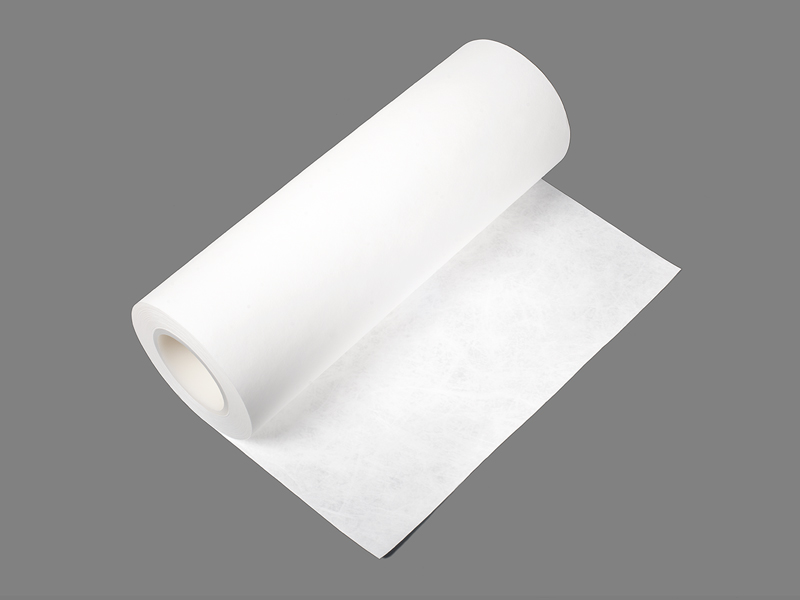
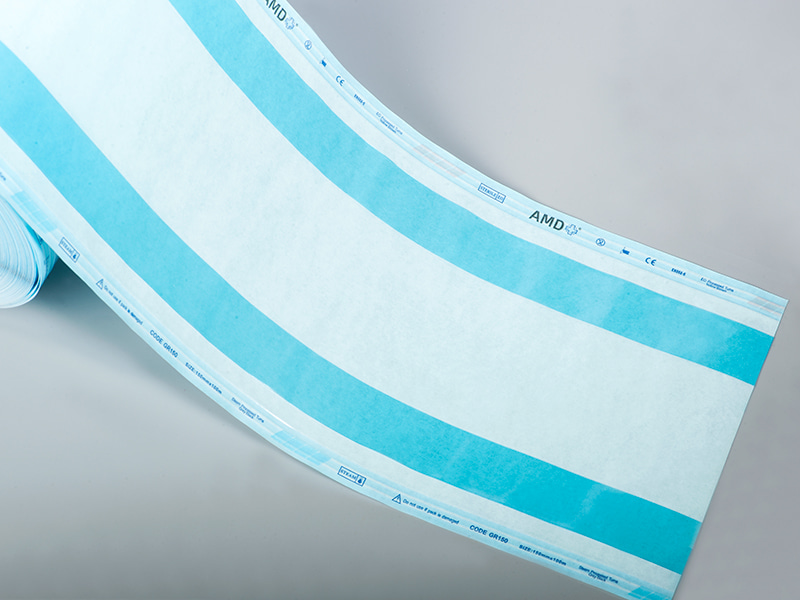
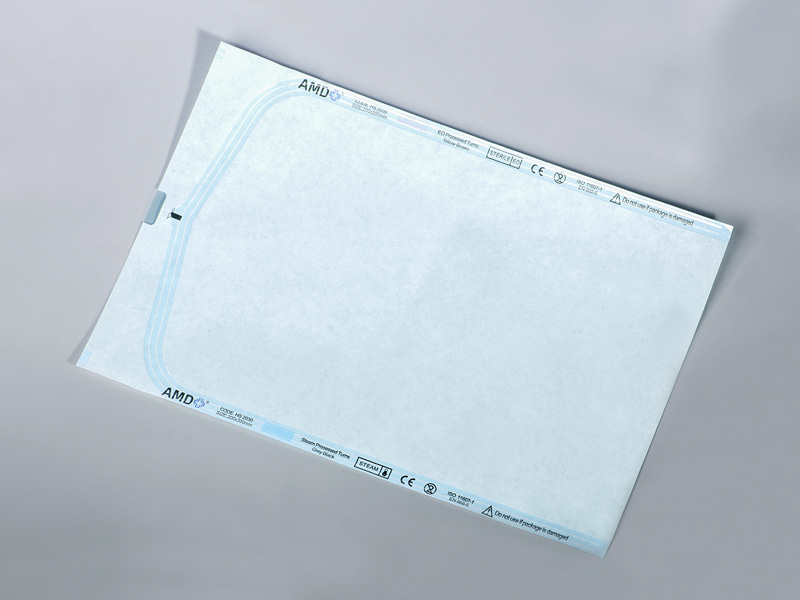
At a basic level, the structure is straightforward. A continuous flat sheet that can be cut, shaped, and sealed.
But in real use, structure is not about appearance. It is about how the material behaves during repeated handling.
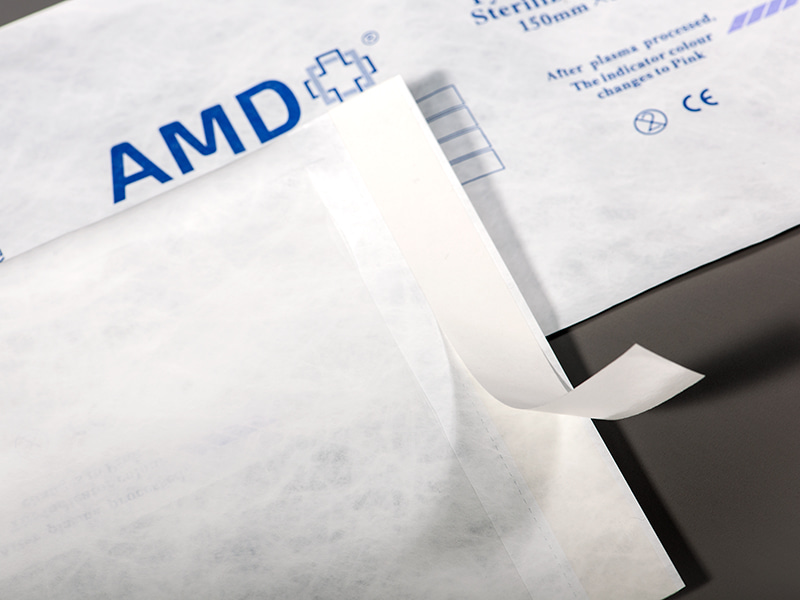
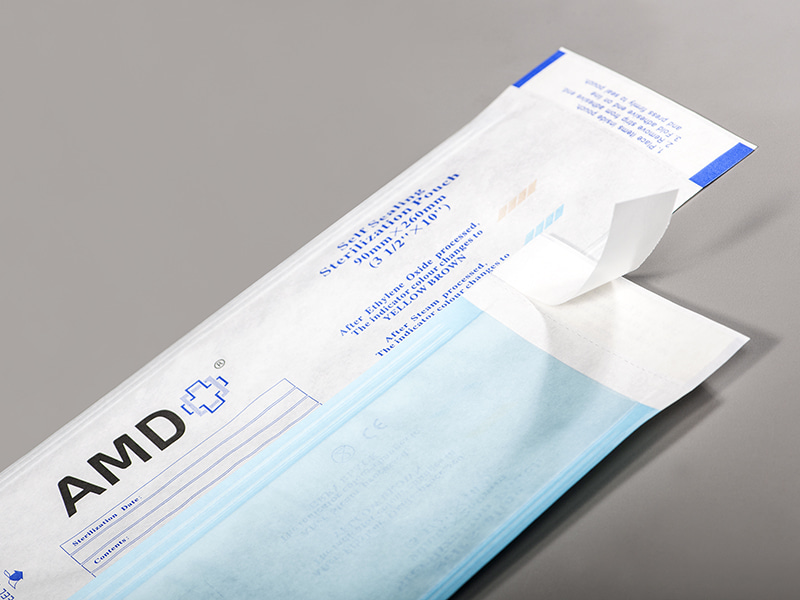
One side of the roll forms the pouch body. The other side supports closure and sealing. Once both sides are joined, a closed environment is created.
This structure must remain stable even when:
- Different lengths are cut repeatedly
- Packaging size changes frequently
- Sealing pressure is not exactly identical every time
If the structure shifts too easily, workflow becomes inconsistent. If it remains stable, packaging becomes predictable.
That predictability is often more valuable than complexity.
How does sealing turn a simple sheet into a controlled environment?
Sealing is the moment where the material stops being flexible and becomes fixed.
Before sealing, the roll is just a sheet. After sealing, it becomes a closed environment that is expected to remain unchanged until use.
In real packaging rooms, sealing is not treated as a complicated process. It is usually confirmed through simple visual checking and handling feedback.
But despite its simplicity, sealing carries heavy responsibility.
If sealing is stable, the package moves forward without interruption.
If sealing is uncertain, the package is checked again.
That difference may look small, but it affects workflow rhythm across the entire system.
| Sealing Condition | Packaging Behavior | Workflow Effect |
|---|---|---|
| Stable closure | Predictable flow | Smooth movement |
| Weak closure | Rechecking needed | Slower rhythm |
| Uneven closure | Uncertain storage | Extra handling |
Sealing is not just a technical step. It is a control point that influences downstream work.
Why does material behavior matter more than it seems in daily operation?
Material behavior becomes noticeable only after repeated use.
At the beginning, everything looks simple. Cut, fill, seal. But after hundreds of cycles, differences become clear.
If the material bends too easily, it loses shape during sealing.
If it is too stiff, adjustment becomes slow and difficult.
Sterilization flat rolls are designed to stay in the middle range of this behavior. Not too rigid, not too soft.
This balance supports continuous work without constant correction.
In busy environments, staff do not have time to adjust material behavior repeatedly. They rely on predictability.
That is where stable material response becomes important.
How does flexibility change packaging decisions in real workflow?
Flexibility is not only about size. It also affects how decisions are made during work.
Instead of selecting different packaging formats for different instruments, staff can simply adjust the length of the roll.
That small change removes one decision layer.
In practice, this means:
- Less sorting before packaging
- Fewer material changes during workflow
- Faster preparation for mixed instrument types
It sounds simple, but in repetitive work environments, removing even one step has a noticeable impact over time.
Flexibility turns packaging into a more direct action rather than a multi-step selection process.
How does visibility support fast and low-interruption workflow?
In many packaging areas, time is not only spent on sealing. A large portion of time is spent on checking.
What is inside? Which package is which? Is this item ready or still pending?
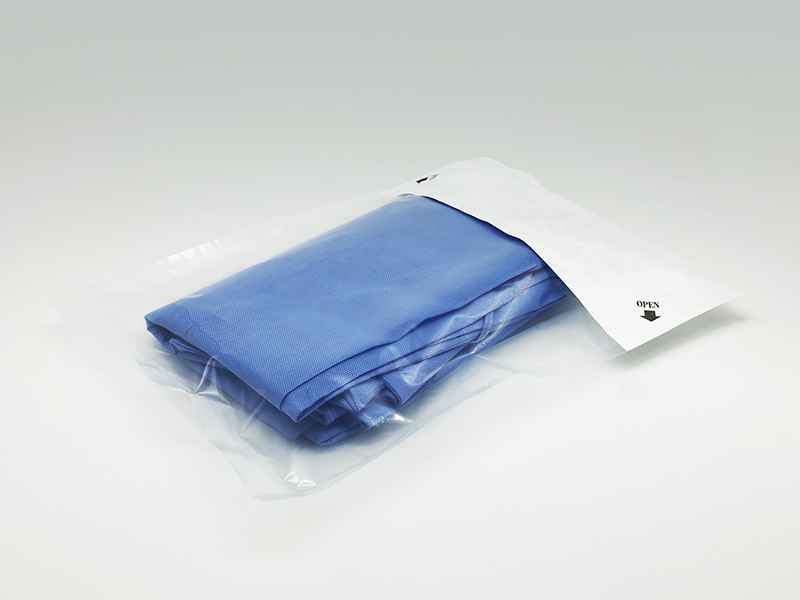
Sterilization flat rolls often allow partial visibility. That means contents can be recognized without opening.
This reduces unnecessary handling.
Instead of opening packages for confirmation, staff can visually scan and identify items.
This creates a smoother flow:
Less opening → less disruption → faster movement between tasks
In environments where many packages are handled at once, this difference becomes more noticeable.
What happens when stability is inconsistent across materials?
Not all issues appear immediately. Many appear gradually.
A slight difference in sealing behavior. A small change in stiffness. A minor variation in appearance.
Individually, these are small. But in repeated use, they create extra steps.
When stability is not consistent:
- Staff recheck more often
- Sealing adjustments increase
- Storage organization becomes less predictable
- Workflow rhythm slows slightly
It does not stop production, but it adds invisible workload.
Over time, these small interruptions affect efficiency more than major failures.
How does packaging structure support long-term storage conditions?
After sterilization, instruments do not move directly into use. They are often stored for varying periods.
During storage, packaging becomes a silent protective layer.
Sterilization flat rolls are expected to maintain their sealed condition without change.
If the structure holds, internal condition remains stable.
If it weakens, uncertainty begins to grow.
Storage environments are not always identical. Temperature, handling frequency, and stacking conditions may vary.
Packaging is expected to stay stable across all of them.
This is why structural consistency is often valued more than surface appearance.
How does workflow rhythm depend on packaging consistency?
Medical packaging work is often repetitive and continuous. The rhythm matters as much as the steps.
When materials behave consistently, workflow feels smooth. Movements become predictable. Staff do not need to pause for correction.
When materials vary, rhythm breaks slightly. Small pauses appear. Adjustments become more frequent.
Sterilization flat rolls contribute to rhythm stability by:
- Maintaining consistent sealing behavior
- Allowing predictable cutting and sizing
- Supporting repeatable handling patterns
The goal is not speed alone. It is continuity without interruption.
Why does sterilization flat roll usage feel more like a system than a material?
At a glance, it is just a packaging sheet.
But in real environments, it connects multiple stages:
Preparation → packaging → sealing → sterilization → storage → use
Each step depends on the previous one.
That makes it part of a system rather than a standalone material.
Its role is not to perform one function, but to maintain stability across transitions.
This is why small changes in its behavior can influence the entire workflow more than expected.
How does design simplicity support operational clarity?
Sterilization flat rolls do not rely on complex design features.
Instead, they focus on a few stable functions:
- Cuttable length
- Sealable edges
- Flexible sizing
- Stable structure after closure
This simplicity reduces confusion in daily work.
Staff do not need to interpret multiple formats or adjust to different packaging types.
One system, repeated use, predictable outcome.
Over time, that clarity becomes part of workflow comfort.
What makes sterilization flat rolls remain relevant in changing packaging environments?
Even as medical packaging systems evolve, the need for stable, flexible, and repeatable materials remains.
Sterilization flat rolls continue to appear because they match this basic requirement.
They do not depend on complex setup. They do not require multiple formats. They adapt to different instruments without changing core structure.
In environments where repetition is constant, this kind of simplicity remains practical.
Not because it is advanced, but because it is reliable in repeated motion.


 ‘s-Gravenweg 542, 3065SG RotterdamThe Netherlands
 +31 (0)10 254 28 08