
 English
 Français
 Deutsch
 Nederlands
In modern clinical, laboratory and industrial settings, the process of sterilization is a linchpin of safety and quality control. Instruments, devices and supplies that move between patient care areas, research benches, or production lines must be processed in ways that reliably reduce microbial risk. One simple, low-cost tool that helps teams confirm that a sterilization cycle has run under appropriate conditions is the chemical indicator strip — often supplied in tape form for easy application and visibility.
Content
- 1 Why visual confirmation matters in sterilization
- 2 How steam-sensitive indicator strips function (conceptually)
- 3 Typical applications and environments
- 4 Practical benefits without technical boasting
- 5 Choosing the right strip for your workflow
- 6 Best practices for placement and use
- 7 Integrating indicators into compliance and quality management
- 8 Environmental and disposal considerations
- 9 Real-world scenarios: three short vignettes
- 10 A short, flexible checklist for teams
- 11 When to consult additional verification methods
- 12 Closing thoughts: practical, visible, and actionable
Why visual confirmation matters in sterilization
Sterilization equipment such as steam autoclaves and sterilizers produces conditions intended to inactivate or destroy microorganisms. However, machines can malfunction, loads can be mispacked, and operators can make errors. Chemical indicators provide immediate, visible feedback that a key process parameter — usually exposure to steam and appropriate temperature for a period of time — was present at the indicator location. Unlike biological indicators, which demonstrate microbial inactivation through incubation, chemical indicators are fast and straightforward: they change color or display evidence when exposed to the intended sterilizing conditions.
A strip that is easy to apply and clearly readable at a glance reduces friction in busy departments. It helps staff confirm that an item has passed through a process step before release, transport or storage.
How steam-sensitive indicator strips function (conceptually)
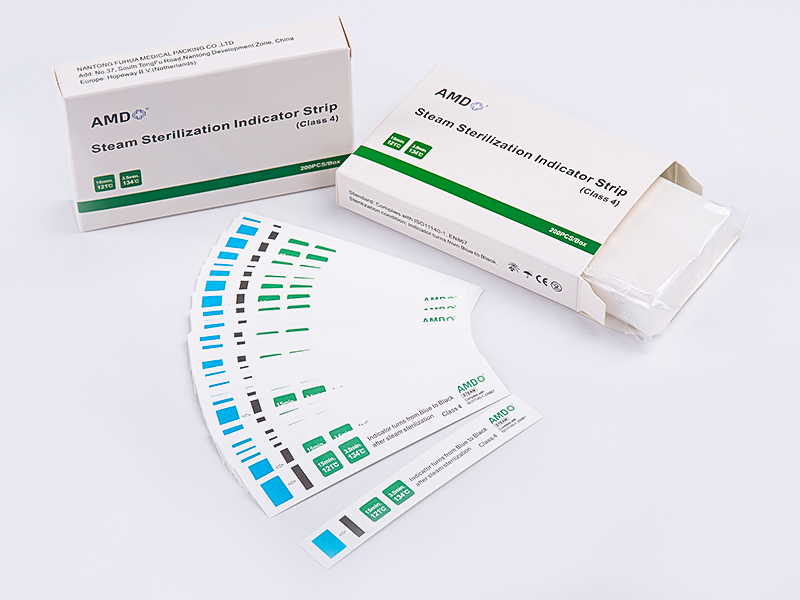
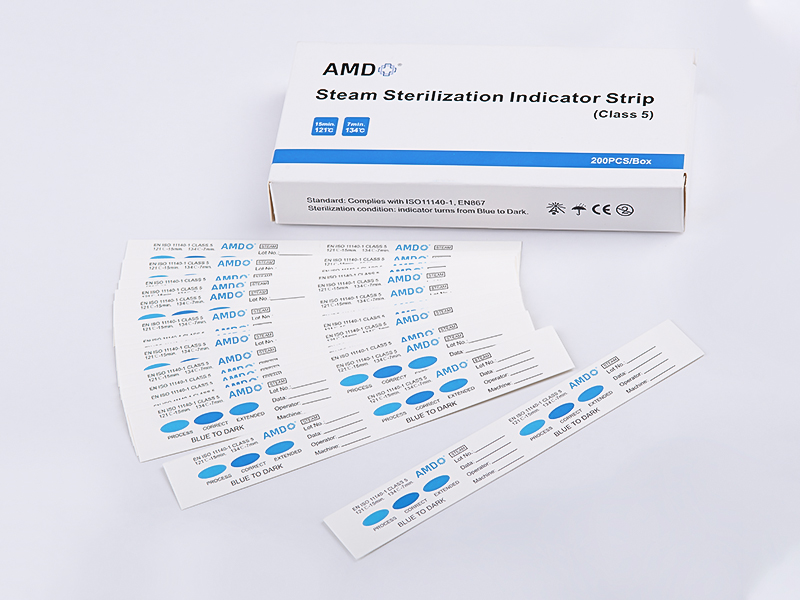
At their core, steam indicator strips incorporate a chemical formulation that responds to steam exposure and heat. When placed inside or on the outside of a package and processed in a steam sterilizer, the chemical undergoes a visible transformation — typically a color change or a patterned mark — which signals that steam reached the indicator and that heat exposure occurred at that point. This is not the same as a microbiological test; instead it is a process indicator designed to signal the presence of sterilizing conditions.
Because the change is local to where the strip is placed, strategic placement matters. A strip affixed to the outside of a package will confirm that the package exterior experienced steam, whereas a strip placed inside a wrapped pouch will indicate that steam penetrated the package interior to the indicator's location. Understanding this distinction helps teams use the tape in a way that supports their validation and daily monitoring practices.
Typical applications and environments
Steam-sensitive indicator strips in tape form are used widely across sectors where steam sterilization is routine:
- Healthcare facilities: Operating rooms, central sterile supply departments, dental clinics and outpatient procedure rooms use indicator strips to support instrument processing and turnover.
- Laboratories: Clinical and research labs apply indicators to glassware, tools and wrapped loads to confirm sterilization steps.
- Veterinary practices: Animal care settings use strips to maintain instrument hygiene and patient safety.
- Small-scale manufacturing and food-related processes: Where sterilization or pasteurization steps are critical to product safety, simple visual indicators can assist line checks and documentation.
Because the product is low profile and simple to apply, it is often folded into daily checklists and visual management systems (for example, color-coded trays or logs).
Practical benefits without technical boasting
Rather than leaning on superlatives, it is useful to view these strips for the concrete, everyday benefits they provide:
- Rapid visual feedback: Operators can check a package or load immediately at cycle completion.
- Ease of use: Tape form allows indicators to be adhered to a range of surfaces and packaging types.
- Visibility in workflow: Clear graphics or high-contrast marks help busy teams detect process outcomes quickly.
- Low-cost monitoring: Because they are consumable and inexpensive, strips can be used frequently without major budget impact.
These pragmatic advantages support adherence to cleaning and sterilization protocols, staff training and basic internal audits. Remember, chemical indicators support process control; they do not replace biological testing, which remains the definitive method for verifying microbial inactivation where required.
Choosing the right strip for your workflow
Selecting the right indicator strip depends on several non-technical considerations that align with facility routines:
- Placement intent: Is the indicator needed on the package exterior for routine checks, or inside the package to test penetration? Choose strip placement to match the monitoring goal.
- Readability: Look for high-contrast markings and straightforward interpretation guidance; opaque printing that becomes clear under steam exposure is helpful in fast-paced settings.
- Adhesion: A tape-based indicator that adheres well to different packaging substrates — paper, polymer pouches, stainless surfaces — reduces the chance of losing the strip during handling.
- Compatibility with packaging: Ensure the indicator does not compromise the integrity of barrier packaging or leave residues that complicate downstream processes.
- Traceability needs: Some teams prefer indicators with space for lot numbers, dates or initials so that results can be tracked in a log.
The HopewayAMD range provides variants intended for a range of uses; purchasers should match the selection to their process behaviors and documentation approach rather than defaulting to any single option.
Best practices for placement and use
Getting the value from indicator strips requires mindful habits. Here are practical steps teams can adopt:
- Designate standard locations for strip placement on common packages. Standardization reduces variability when multiple staff members prepare loads.
- Place strips at the challenging point in the package where penetration could be least reliable (for example, near folds or dense instrument clusters) to get a conservative check.
- Use the strip with each load that requires routine visual confirmation, rather than selectively, to maintain consistent monitoring.
- Document results in a sterilization log: date, cycle number, operator initials and indicator outcome. This practice supports traceability and internal audits.
- Train staff to interpret partial changes correctly and to know when to escalate (for example, when a strip shows incomplete reaction or is unreadable).
- Inspect strips after processing but while items are still in the sterile processing area. Early detection of issues prevents release of questionable items.
These procedural steps are simple but powerful: they encourage uniform practice and reduce human error in daily operations.
Common misconceptions and pitfalls
Several misunderstandings about visual indicators recur in practice. Clearing them up helps teams use strips properly:
- Misconception: A color change guarantees sterility. Chemical strips confirm exposure to process conditions at the indicator site. They do not substitute for biological indicators or process validation when microbial inactivation must be demonstrated.
- Pitfall: Placing the strip in an easy-to-reach but non-representative spot. Putting the strip only on external surfaces with good steam access may produce false confidence. Place indicators where penetration is challenging for a realistic check.
- Pitfall: Ignoring partial or ambiguous changes. When the strip shows an incomplete transformation, treat the load as suspect and follow escalation protocols.
- Misconception: All steam indicators behave the same. Different formulations may react in distinct ways; read the manufacturer guidance and train staff accordingly.
Addressing these points in routine training and checklists helps maintain a culture of caution and compliance.
Integrating indicators into compliance and quality management
Regulatory frameworks and professional standards often require routine monitoring of sterilization equipment and processes. Visual chemical indicators play a supporting role in this ecosystem:
- Daily operational checks: Indicators help teams perform rapid checks as part of daily start-up and load processing steps.
- Routine documentation: Recording indicator outcomes contributes to shift logs and quality records.
- Process improvement: Patterns of indicator failures or anomalies can signal maintenance needs or training gaps.
- Audit readiness: Consistent use of visual indicators, together with documented follow-up actions, demonstrates a facility's commitment to routine monitoring.
Remember that facility policies should align with recognized standards and the recommendations of regulatory agencies. Visual indicators are one tool among several that together document the reliability of sterilization systems.
Environmental and disposal considerations
Because these strips are consumable, facilities should consider their environmental footprint and disposal practice:
- Waste segregation: Dispose of used strips according to local waste management rules. If a strip has been in contact with non-hazardous items, it can usually be disposed of as routine solid waste; if used in a contaminated load, follow medical waste handling rules.
- Material choices: Some suppliers offer strips that reduce packaging waste or use recyclable substrates — an option worth exploring for teams with sustainability goals.
- Inventory management: Keeping a measured stock level reduces expired inventory and waste, while still ensuring availability for routine monitoring.
Balancing practical use with environmental stewardship supports broader institutional sustainability plans.
Real-world scenarios: three short vignettes
To make the guidance more tangible, here are three brief scenarios illustrating daily use.
- Central sterilization department: A decontamination team adopts tape-based indicators for every wrapped instrument tray. They standardize placement at the center fold and log outcomes after each cycle. When they notice a cluster of ambiguous results on a particular cycle, they pause routine release, run a biological indicator and discover a seam issue in a batch of pouches — prompting an equipment check.
- Outpatient dental clinic: The dentist's assistant uses a single strip on each pouch exterior to confirm steam exposure. Training emphasizes that the external check complements, not replaces, the clinic's periodic biological testing. Visual checks reduce turnover time and support patient scheduling.
- Research laboratory: Technicians place strips within boxes of glassware during autoclave runs to ensure internal steam penetration. Documentation of each run helps the lab manager track equipment performance and schedule maintenance when unexpected patterns appear.
Each scenario highlights how the strips support routine checks, staff communication and quality response.
A short, flexible checklist for teams
Use this quick checklist as a daily reminder when integrating visual indicators into sterilization workflows:
- Have you selected an indicator type appropriate for the package and monitoring goal?
- Are strips placed at standardized, representative points in every load?
- Are outcomes recorded in the sterilization log with date and operator initials?
- Is there a clear escalation protocol for ambiguous or failed indicators?
- Are staff trained to interpret results and to perform follow-up actions?
- Is disposal handled in line with waste regulations and facility policy?
A concise checklist like this improves consistency and reduces errors caused by ad hoc practices.
When to consult additional verification methods
Visual chemical indicators are a practical front-line tool, but certain circumstances call for more rigorous verification:
- When loading new or unfamiliar instrument configurations.
- After maintenance or repairs to sterilization equipment.
- When regulatory or accreditation requirements explicitly require biological monitoring at specified frequencies.
- When indicator trends suggest intermittent failures or insufficient process controls.
In these situations, biological indicators, mechanical records, and manufacturer-recommended validation steps provide deeper assurance that sterilization objectives are being met.
Closing thoughts: practical, visible, and actionable
Steam-sensitive strips in tape form are a straightforward, user-friendly component of everyday sterilization oversight. When selected with attention to placement and readability, and used as part of a documented practice that includes biological testing where required, they support safe turnover of instruments and supplies. For facilities and teams that want to align daily practice with quality goals, the visual indicator is a practical piece of the toolkit: visible at a glance, simple to use, and effective when combined with disciplined procedures.
If your department is considering standardizing on a particular product line, evaluate how the strip's form factor and readability fit with your packaging choices and staff workflows. Small operational choices — consistent placement, clear logs, and routine staff training — often produce the greatest gains in confidence and compliance.








 ‘s-Gravenweg 542, 3065SG RotterdamThe Netherlands
 +31 (0)10 254 28 08