
 English
 Français
 Deutsch
 Nederlands
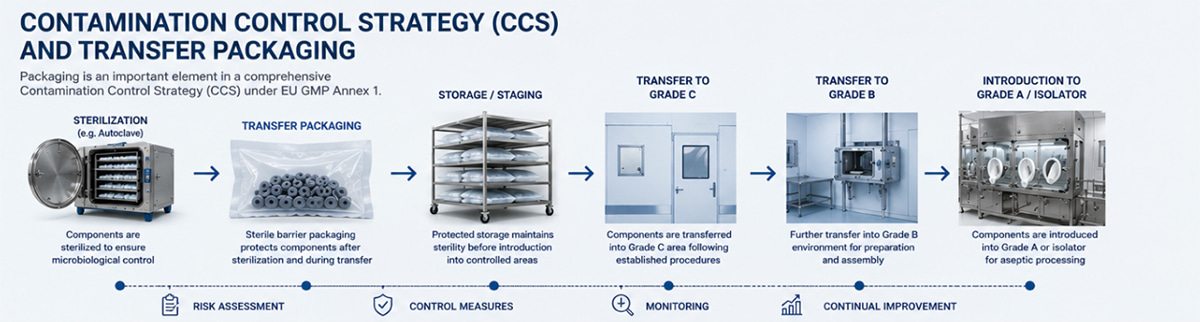
Introduction
Since the release of the revised EU GMP Annex 1, pharmaceutical manufacturers have been required to establish and maintain a comprehensive Contamination Control Strategy (CCS).
For many companies, CCS has become one of the most significant changes in sterile manufacturing over the past decade. While discussions often focus on cleanroom design, environmental monitoring, sterilization validation and operator behavior, one area is frequently overlooked:
the management and transfer of sterilized components.
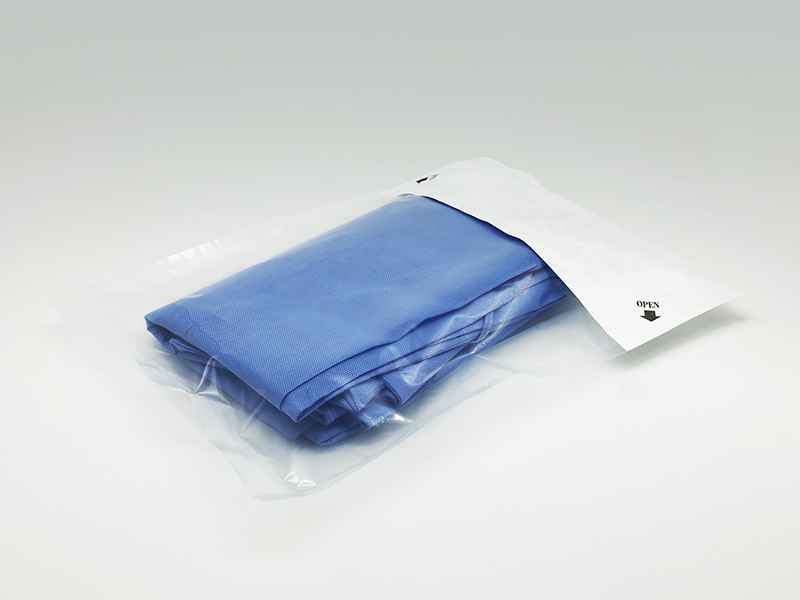
Every sterile manufacturing process relies on components entering controlled environments safely and consistently. Rubber stoppers, aluminum seals, filling machine parts and product-contact accessories must remain protected from contamination after sterilization and before use.
Transfer packaging therefore plays an important role within an effective CCS.
What Is a Contamination Control Strategy?
Annex 1 describes CCS as a holistic approach that identifies and controls contamination risks throughout the entire manufacturing process.
Rather than relying on isolated controls, manufacturers are expected to evaluate how different systems interact.
Typical CCS elements include:
* Facility design
* Personnel practices
* Cleaning and disinfection
* Environmental monitoring
* Sterilization processes
* Material transfer
* Equipment management
* Supplier controls
The objective is simple:
understand where contamination could occur and implement controls before problems arise.
Why Component Transfer Is a Critical Risk Point
Sterilization is not the final step.
Once components leave the autoclave or sterilization process, contamination risks begin immediately.
Examples include:
* Storage after sterilization
* Transportation between departments
* Waiting before production
* Transfer into Grade B areas
* Transfer into isolators
Every handling step introduces potential risk.
A perfectly sterilized rubber stopper can become compromised if transferred incorrectly.
For this reason, Annex 1 increasingly encourages manufacturers to evaluate component handling as part of their CCS.
Packaging as a Contamination Control Measure
Packaging is often viewed as a logistics tool.
In reality, it is also a contamination control tool.
Appropriate transfer packaging can help:
* Protect sterilized components
* Minimize particulate exposure
* Reduce handling risks
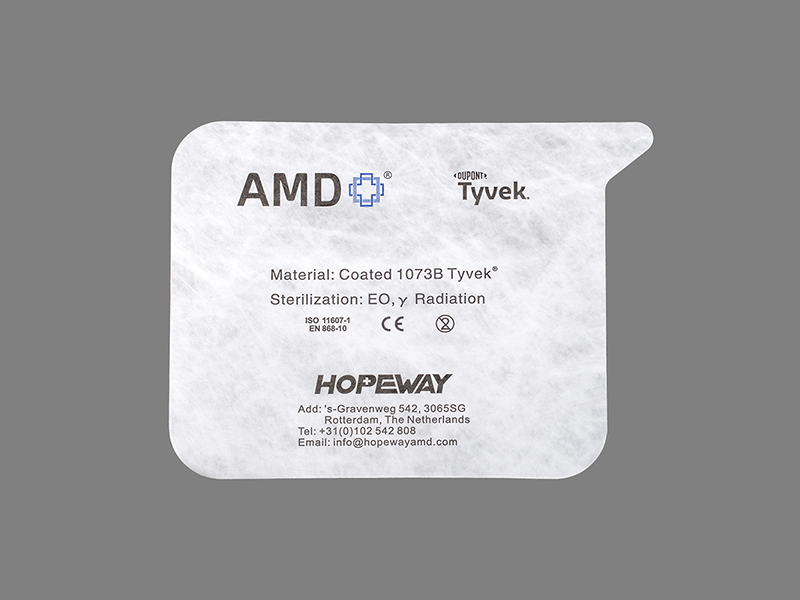
* Support traceability
* Improve consistency between batches
Packaging should therefore be evaluated using the same risk-based approach applied to other CCS elements.
Key Packaging Considerations
When evaluating transfer packaging, manufacturers typically review:
Sterilization Compatibility
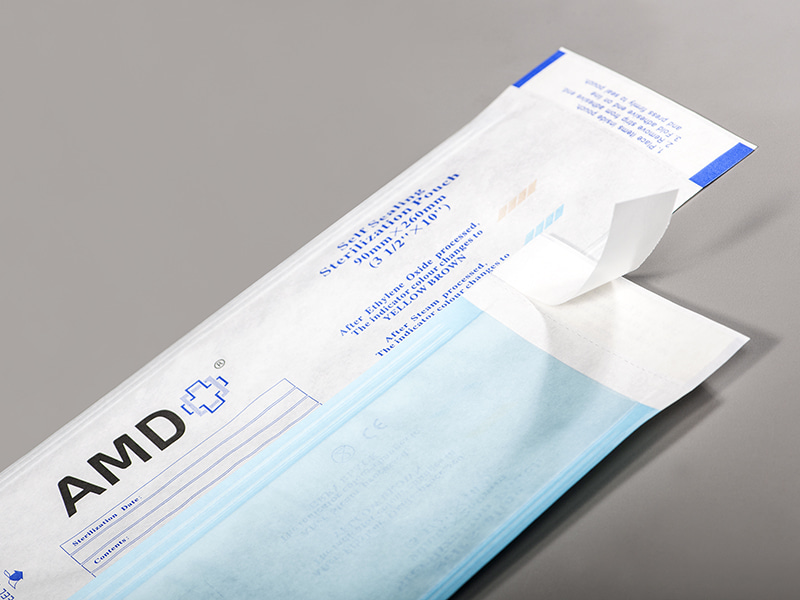
Packaging must support the chosen sterilization process.
Examples:
* Steam sterilization
* VHP sterilization
* Gamma irradiation
* E-beam sterilization
Integrity After Sterilization
Packaging should remain functional and intact after sterilization.
Potential concerns include:
* Material degradation
* Seal failure
* Loss of barrier performance
Cleanroom Suitability
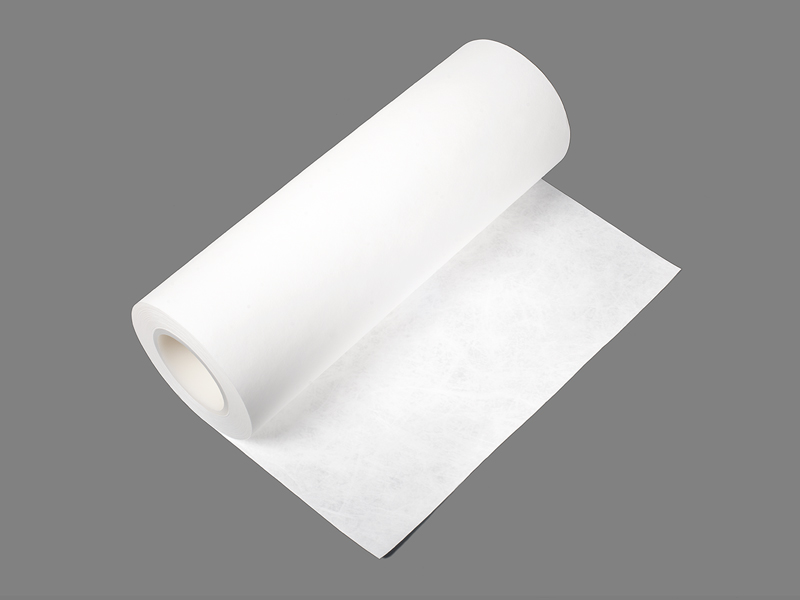
Packaging materials should generate minimal particles and fibers.
This is particularly important when components enter Grade A and Grade B environments.
Traceability
Packaging should support:
* Batch identification
* Sterilization status
* Component identification
These requirements are frequently reviewed during inspections and audits.
CCS Is Not Only About Equipment
Many CCS projects focus heavily on:
* Isolators
* HVAC systems
* Environmental monitoring
These are important.
However, contamination events frequently occur during routine handling activities.
Component transfer and packaging deserve the same level of attention as larger engineering controls.
Conclusion
An effective CCS requires manufacturers to examine every stage of sterile manufacturing.
Transfer packaging may seem like a small detail, but it directly influences how sterilized components are protected, transported and introduced into controlled environments.
As Annex 1 expectations continue to evolve, packaging should be viewed not merely as a transportation aid but as an active element of contamination control.



 ‘s-Gravenweg 542, 3065SG RotterdamThe Netherlands
 +31 (0)10 254 28 08