
 English
 Français
 Deutsch
 Nederlands
Across clinics, dental rooms, and small treatment centers, packaging has become part of daily routine. Instruments move from cleaning areas to storage, then back into use. In between, they need protection. Not just from dust or handling, but from anything that could affect their condition before the next procedure.
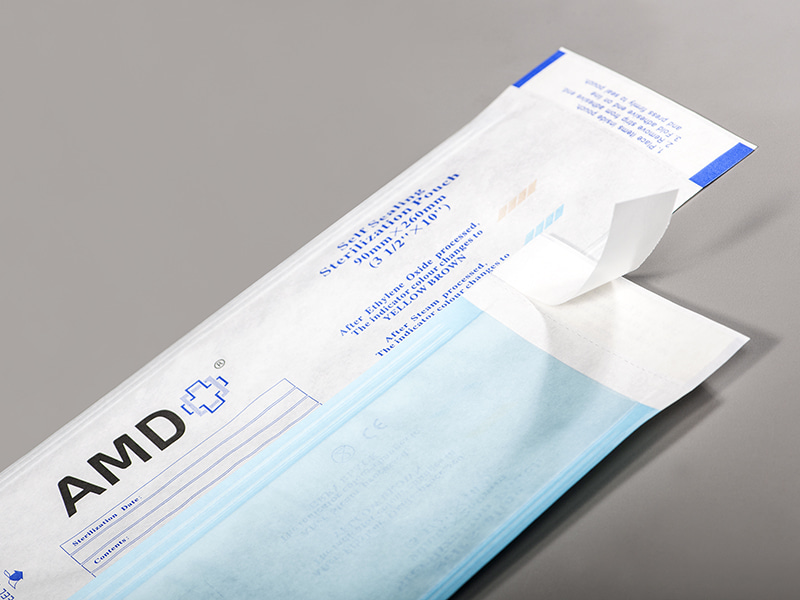
Self seal pouches are often chosen for this task. They simplify the process. No extra equipment is needed for closure. The design supports quick handling in environments where time is limited and attention is divided.
Yet the simplicity of the pouch can be misleading. A small mistake in sealing or labeling can affect the entire process. The goal is not only to close a bag. It is to maintain clarity, order, and confidence in what has been prepared.
Content
- 1 Why does proper sealing and labeling matter in daily practice?
- 2 What should be prepared before sealing a pouch?
- 3 How should instruments be placed inside the pouch?
- 4 What is the correct way to seal a self seal pouch?
- 5 How can sealing errors be avoided?
- 6 What information should be included when labeling?
- 7 How should labeling be applied without affecting the pouch?
- 8 How can sealed and labeled pouches be checked before storage?
- 9 What role does consistency play in the process?
- 10 How do daily habits influence long-term outcomes?
Why does proper sealing and labeling matter in daily practice?
Every packaged instrument tells a quiet story—without saying a word, it lets staff know if it's ready to use, how it's been handled, and when it was prepped. If that story is unclear, hesitation creeps in right away.
A self seal pouches medical that's not sealed tight might pop open a little during storage. Even a tiny gap changes how people see that instrument—staff will second-guess its condition, Find to reprocessing, delays, or unnecessary waste.
Labeling does the same kind of important work. Without clear marks, keeping track of instruments gets messy fast. In a busy setting, confusion builds quickly: instruments get mixed up, or used out of order.
Sealing and labeling aren't separate steps—they work hand in hand. One keeps the contents safe and clean; the other gives the critical info needed. When both are done carefully, the whole workflow runs smoother, and you know exactly what to expect.
What should be prepared before sealing a pouch?
Sealing a pouch starts way before you even pick up the pouch itself—how you prepare sets the stage for how well it seals.
First, instruments need to be clean and completely dry. Any leftover moisture can mess up the inside of the pouch, and it might even ruin the adhesive strip that keeps it closed.
Your work surface has to be clear, too. A cluttered area makes mistakes more likely—you'll misplace items easier, or forget a step without noticing.
Don't forget about your hands or gloves. Handling everything cleanly means you won't accidentally get unwanted particles inside the pouch while packaging.
And take a quick look at the pouch itself. A fast check makes sure there are no visible flaws—small tears or uneven edges can break the seal, making all your work for nothing.
Preparation doesn't take long, but it sets the tone for the entire process. Do it right, and the rest goes smoothly.
How should instruments be placed inside the pouch?
Putting instruments in a pouch might seem like a simple step, but it directly affects how well the pouch seals—no cutting corners here.
Items should fit comfortably inside—don't overstuff it. Overfilling pushes on the edges of the pouch, making it harder to seal, and the seal won't be reliable.
Sharp or pointed instruments need extra care. Arrange them so they don't press against the pouch material. If the pouch gets stretched, the seal will weaken over time, and it might open up unexpectedly.
Laying instruments flat works better in cases. It lets the pouch close evenly, so you can press out any air easily, and the adhesive strip can stick fully—no gaps, no loose spots.
Leave a small gap near the sealing edge, too. That little bit of space keeps the adhesive area clean and ready to close, so the seal holds tight every time.
What is the correct way to seal a self seal pouch?
Sealing a pouch involves more than folding a strip over an opening. The action is simple, but it requires care.
The protective strip is removed slowly. This helps avoid touching the adhesive surface too much. Contact with fingers can reduce its effectiveness.
The flap is then folded over the opening. Alignment matters here. The edge should meet evenly across the width of the pouch.
Pressure is applied along the seal. Not in one spot, but across the entire line. A steady motion works better than a quick press. This helps create a consistent bond.
Air inside the pouch should be minimized before sealing. A gentle press removes excess air without disturbing the contents.
A properly sealed pouch lies flat. The edge looks smooth and continuous. There are no visible gaps or folds.
How can sealing errors be avoided?
Mistakes often happen in small ways. They are not always obvious at the moment.
One common issue is rushing. When staff move too quickly, alignment may be off. The seal may not hold evenly.
Another issue is touching the adhesive area. Oils from skin can reduce its ability to stick. Even light contact can make a difference.
Overloading the pouch also creates problems. When the contents press against the seal, it may open over time.
A simple checklist can help reduce errors:
| Step | What to Watch For |
|---|---|
| Remove strip | Avoid touching adhesive |
| Align flap | Keep edges straight |
| Apply pressure | Cover full sealing area |
| Check final seal | Look for gaps or folds |
Small habits make a difference. With repetition, these steps become routine.
What information should be included when labeling?
Labeling provides context. It tells others what they need to know without opening the pouch.
Basic information often includes:
- Identification of the contents
- Date of preparation
- Initials or code of the person who prepared it
The goal is clarity. Labels should be easy to read at a glance. Complex notes can create confusion rather than help.
Placement of the label matters as well. It should not interfere with the seal. Writing over the sealed edge can weaken it.
Ink should remain on the outer surface. It should not transfer or fade easily. Smudged writing reduces readability.
Consistency across all labeled pouches helps build a clear system. Staff can understand information quickly without needing to interpret different formats.
How should labeling be applied without affecting the pouch?
Writing on a pouch requires a steady hand. Pressure should be controlled. Pressing too hard may affect the material.
The label area should remain separate from the sealing strip. This protects the integrity of the closure.
If pre-printed labels are used, they should be placed carefully. Edges should lie flat. Peeling corners can catch on other items during storage.
Spacing is also important. Labels should not cover large areas unnecessarily. A compact, clear format works better.
The aim is to provide information without interfering with function.
How can sealed and labeled pouches be checked before storage?
A quick check after sealing and labeling can prevent later issues.
The seal should be examined visually. It should appear even and secure. Any irregularity may require resealing.
The label should be reviewed for clarity. If writing is unclear, it is better to correct it immediately.
The pouch should feel stable in hand. Loose or shifting contents may indicate overfilling or poor placement.
This check does not need to be long. A few seconds can confirm that everything is in order.
What role does consistency play in the process?
Consistency brings order to routine tasks. When every pouch is sealed and labeled in a similar way, the system becomes easier to manage.
Staff can trust what they see. There is less need to double-check or question the process.
Training becomes simpler as well. New staff can follow a clear pattern rather than guess what is expected.
Consistency does not mean rigidity. It means applying the same basic principles each time. Over time, this creates a stable workflow.
How do daily habits influence long-term outcomes?
Small actions repeat throughout the day. Each sealed pouch reflects a moment of attention or distraction.
When sealing and labeling are done with care, the results build over time. Storage areas remain organized. Items are easy to identify. Fewer materials need to be reprocessed.
When steps are skipped or rushed, the opposite happens. Confusion increases. Time is lost. Materials may be discarded earlier than expected.
Daily habits shape these outcomes. They are not dramatic, but they are steady.
In busy environments, simple routines provide structure. Sealing and labeling may seem like minor tasks, yet they support the entire flow of instrument handling.

 ‘s-Gravenweg 542, 3065SG RotterdamThe Netherlands
 +31 (0)10 254 28 08