
 English
 Français
 Deutsch
 Nederlands

Content
- 1 What Role Packaging Material Plays During Sterilization
- 2 How Tyvek Material Behaves During Sterilization
- 3 How Tyvek Supports the Sterilization Packaging Process
- 4 How a Center Strip Pouch Applies These Material Properties
- 5 Why Material Performance and Pouch Sealing Both Matter
- 6 Process Stages and Packaging Material Roles
- 7 Practical Limits and System Thinking
- 8 Sterilant Access and Barrier Continuity Through Tyvek Packs
What Role Packaging Material Plays During Sterilization
Medical devices that are terminally sterilized need a package that stays closed during the process yet still lets the sterilizing agent reach every critical surface of the product. The packaging material is the interface between that agent and the device. It must admit steam, ethylene oxide or another validated medium under controlled conditions, then continue to act as a barrier against microbes once the cycle is finished and the pack returns to ordinary storage and transport.
If the material blocks the sterilant, the device may not receive an adequate process. If the material or its seals fail after processing, contamination can enter even though the cycle itself was successful. Packaging integrity—unbroken surfaces, continuous seals and a design that survives handling—therefore runs through the entire life of the sterile barrier system, from loading the sterilizer to opening in the clinical area. Material choice is only one part of that system; sealing methods, pouch geometry and validation complete it.
How Tyvek Material Behaves During Sterilization
Sterilant Permeability Under Validated Conditions
Tyvek used in medical packaging has a porous fibre structure that can allow compatible sterilizing agents to pass when the process has been validated for that pack design. Permeability is not unlimited or automatic for every cycle; grade, pack layout and process parameters define whether penetration and aeration meet the protocol. Tyvek Pouches Medical Devices applications depend on matching those elements rather than on the material name alone.
Microbial Barrier After the Cycle
The same fine fibre network is relied on to hinder microbial penetration when the finished pack remains intact. Barrier performance is demonstrated for the sealed system, including any film partners and seal lines, not for an open sheet in isolation. Channels in seals, punctures or abusive handling can bypass the material's contribution.
Strength for Processing and Distribution
Sterilization, unloading, boxing and shipping impose flexing, stacking and occasional impacts. Material strength helps the pack survive those stresses so that the barrier is not lost to tears or pinholes before use. Strength must still allow controlled peeling at the point of opening where the design requires it.
Breathable Structure for Gas Exchange
Breathability supports both the entry of sterilant and the removal or exchange of gases when the validated cycle requires it. Trapped residuals or incomplete air removal are process concerns addressed by cycle design and pack permeability together. Tyvek Bags for Sterilization formats use that breathability within the limits established for each validated configuration.
Barrier Function in Storage
After processing, the pack's role is to keep the device protected until it is opened under appropriate conditions. Tyvek panels contribute to that ongoing barrier when seals are sound and the pack is stored within the conditions assumed during validation.
How Tyvek Supports the Sterilization Packaging Process
Compatible sterilizing agents can reach the device through the porous panel while the pouch remains closed. Where the cycle demands gas exchange or aeration, the same panel supports that step under validated settings. Once the process is complete, the material helps form the microbial barrier that storage depends on. Sealing structures around the panel close the system so that the device is enclosed on all sides. Material and seals are interdependent: a sound panel with an open seal is not a sterile barrier, and a perfect-looking seal on a punctured panel is not either. Sterilization Pouch Tyvek constructions are therefore specified and tested as full systems.
How a Center Strip Pouch Applies These Material Properties
Tyvek-Based Construction
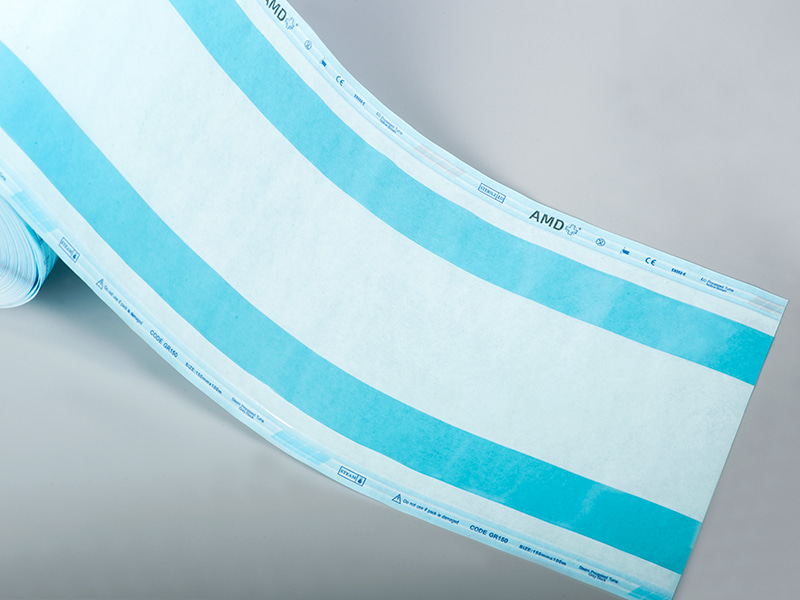
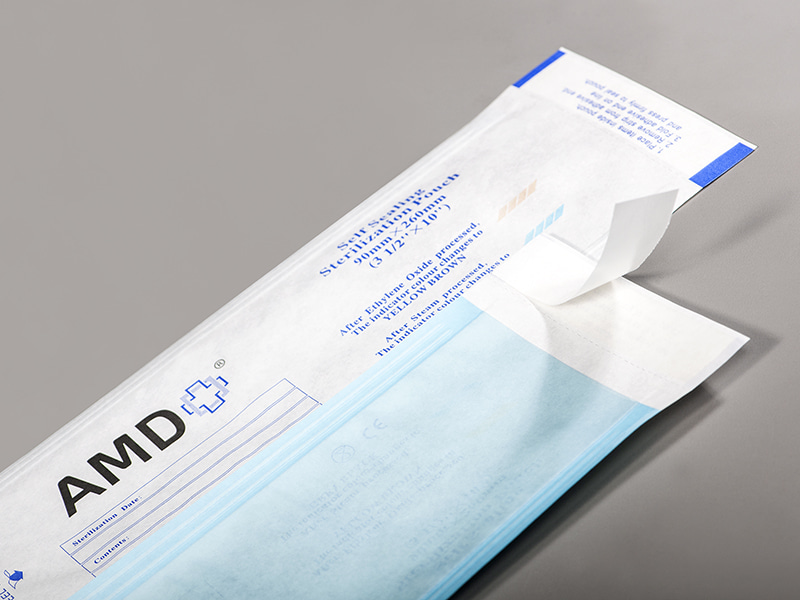
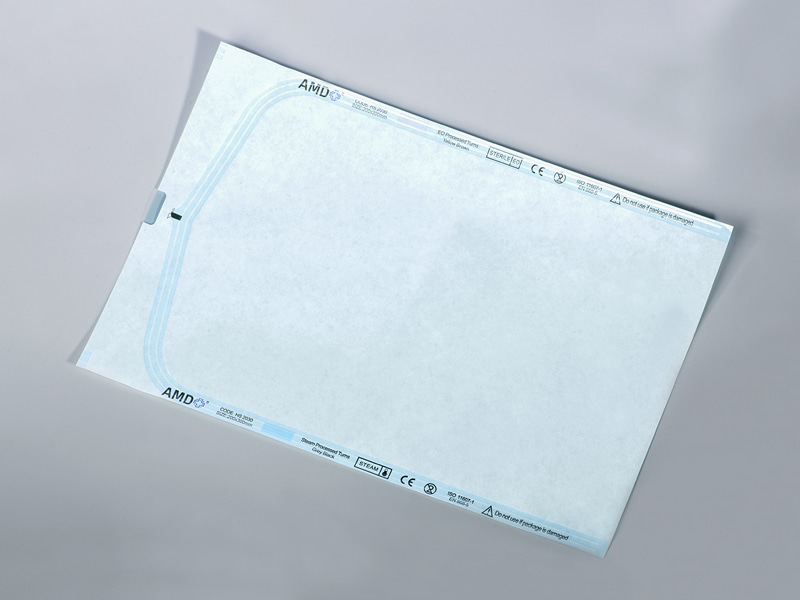
A center strip pouch places Tyvek in a defined band as the porous component for sterilization packaging applications that call for this material. The strip provides the permeability and barrier contribution associated with the selected grade, while other faces of the pouch typically use film suited to sealing and, where needed, visibility of contents.
Center Strip Design
The strip geometry fixes how much porous area is available and where seal paths run. That layout supports individual packaging of devices that fit the cavity and the validated loading pattern. Strip position and width are controlled features of the pouch, not incidental scraps of material.
Sterilization Compatibility
Use is limited to sterilization systems for which the materials, seals and load configuration have been validated. Changing device size, load density or process type without review can take the pack outside its demonstrated performance. Compatibility is documented, not assumed from appearance.
Protective Structure of the Whole Pouch
Tyvek, film portions and seal zones form one enclosure. Protective performance is the result of that assembly under process and distribution stress. Incoming inspection, seal process control and periodic integrity checks keep production aligned with the validated design.
Practical Format for Compatible Devices
Pouch-style packs suit many single-device or small-set presentations. Label areas, opening direction and peel behaviour are designed so that presentation at the point of use can follow aseptic practice when instructions are observed. Tyvek Peel Pouches of this type are evaluated on opening behaviour as well as on barrier and sterilant transfer.
Why Material Performance and Pouch Sealing Both Matter
Sealing integrity closes potential contamination paths along the perimeter. Incomplete bonds, wrinkles that form tunnels or burnt, brittle seal edges can allow ingress even when the porous panel is intact. Conversely, effective seals cannot compensate for a panel that is unsuitable for the process or damaged during handling. Material properties and pouch construction share the protective role: one supplies controlled permeability and barrier character; the other supplies geometry, seal land and mechanical stability. The complete packaging system—including process challenge evidence, seal verification and stability considerations—needs validation for the intended sterilization method and device. Changes to adhesive, strip grade or sealing equipment are controlled so that the validated state remains meaningful.
Process Stages and Packaging Material Roles
| Stage | What the packaging must do | Tyvek-related contribution |
|---|---|---|
| Before sterilization | Enclose device; remain seal-intact | Panel and seals form closed pack |
| During sterilant exposure | Allow agent to reach device | Porous structure under validated conditions |
| Aeration or gas exchange | Support cycle requirements where applicable | Breathability within process design |
| After cycle | Maintain microbial barrier | Fibre structure plus intact seals |
| Distribution and storage | Survive handling without barrier loss | Material strength and seal durability |
| Point of use | Open in a controlled manner | Peel design coordinated with pouch build |
Practical Limits and System Thinking
Tyvek does not sterilize the device; the validated process does. It does not excuse poor sealing, overloading of the sterilizer chamber or storage in conditions outside the labelled claims. Edge-heavy devices may need trays or guards so that sharp points do not breach the panel. Wet devices or incompatible chemistries may require different packaging strategies. Selection always returns to the device, the process and the documented sterile barrier system.
Sterilant Access and Barrier Continuity Through Tyvek Packs
Tyvek works in sterilization packaging by allowing compatible sterilizing agents to pass under validated conditions while helping to maintain a microbial barrier afterward when seals and surfaces stay intact. Center strip pouches apply that behaviour in a defined panel combined with sealed film structures for individual device packaging. Hopeway AMD B.V. supplies medical packaging products including center strip pouches that use Tyvek for compatible sterile barrier applications. Review of sterilization method, device requirements, pouch design and validation evidence supports selection of packaging that functions as a complete system through processing, storage and controlled opening.
 ‘s-Gravenweg 542, 3065SG RotterdamThe Netherlands
 +31 (0)10 254 28 08